
Market Snapshot: What’s Ahead for the Economy and Markets? Featuring Steve Liesman, Scott Anderson and Mark Zandi
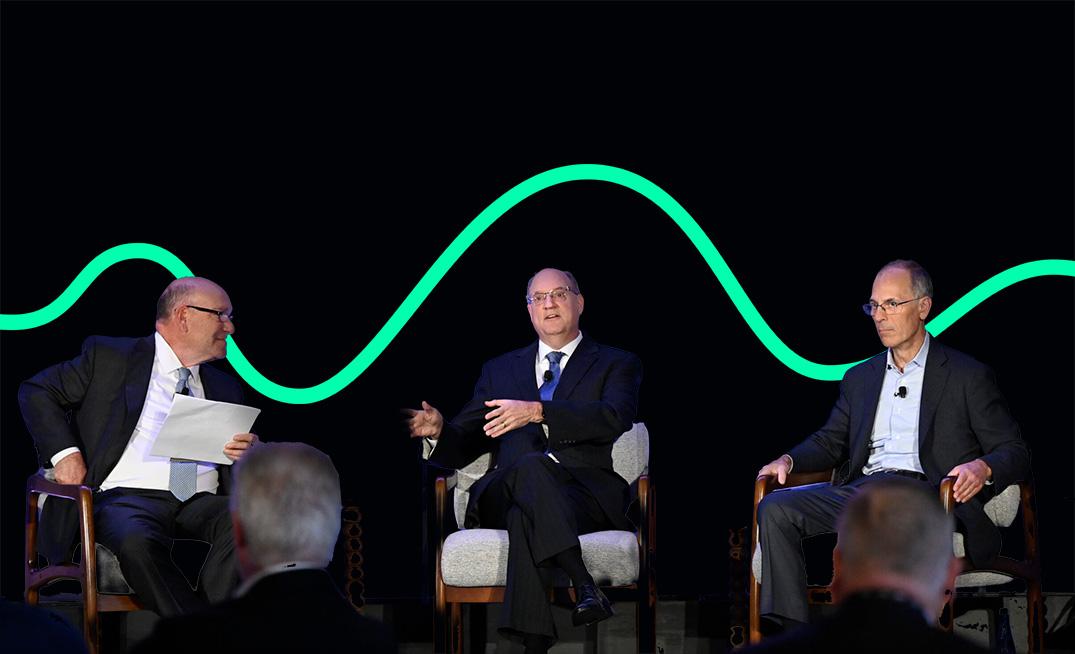
In episode 07 of Market Snapshot, SIFMA President and CEO Kenneth E. Bentsen, Jr. and Director of Research Heidi Learner recap October’s market developments before turning to a replay of the economic outlook panel from SIFMA’s Annual Meeting. Moderated by CNBC’s Steve Liesman, the discussion features Scott Anderson of BMO and Mark Zandi of Moody’s Analytics exploring economic growth, inflation, Fed policy, AI investment and key market risks heading into 2027.
You can listen to this conversation by following “The SIFMA Podcast” on Apple, Spotify, YouTube, or wherever you get your podcasts. Sign up to receive new episodes, delivered right to your inbox.
In This Episode
- The outlook for economic growth and inflation
- Federal Reserve policy and rising Treasury yields
- Consumer spending and labor market trends
- AI-driven investment and productivity
- Credit markets and potential financial stability risks
- Key risks and opportunities shaping markets in 2027
Featured Guests
Steve Liesman
Senior Economics Reporter
CNBC
Scott Anderson, PhD
Chief U.S. Economist and Managing Director
BMO
Co-Chair, SIFMA Economist Council
Mark Zandi
Chief Economist
Moody’s Analytics
Transcript
Kenneth E. Bentsen Jr.: Hello, and thank you for joining us for the November edition of the Market Snapshot Podcast. I’m your host, Ken Bentsen, President and CEO of SIFMA. Featuring SIFMA’s director of research, Heidi Lerner, Market Snapshot is a monthly podcast that takes a concise look at what to move markets and what to watch next. In this episode, we’ll take a quick look back at last month’s markets, and then turn to a replay of the economic outlook panel from SIFMA’s recent annual meeting, which brought together senior industry leaders, policymakers, and regulators to discuss the forces shaping the markets, the economy, and the year ahead. During the panel, CNBC’s Steve Leisman moderated a conversation with Scott Anderson, PhD, Chief U.S. Economist and Managing Director at BMO, and co-chair of the SIFMA Economist Council, and Mark Zandi, Chief Economist at Moody’s Analytics. Today we discussed the outlook for growth, inflation, and interest rates, consumer and business conditions, and key risk and opportunities to watch it going forward. So let’s get started. Heidi, before we begin, let’s start with a quick recap of the market. We’re recording this on November 3rd. What were some of the key takeaways from the markets last month?
Heidi Learner: Well, we had a pretty challenging month, and I would say that’s true with most of the economic data as well as the equity market performance. Um, if we just turn to the macro data, we saw real weakness in September payrolls. We had a gain of just 29,000 jobs, we had a negative 60,000 revision over the prior two months. We had some elevated inflation prints, and that’s true when we’re when we look at both CPI and PPI. Um, both sets of numbers on a headline and court basis came in much higher than expectations. Um I would say the only good piece of news we saw was on Q3 GDP, which came in at a fairly robust 3.4% on the quarter. So I would say that’s the bright spot. Um on the downside, I mentioned some difficulty in the equity market. We saw the uh information technologies sector tumble by about uh 6.8% on the month. Um, that was eclipsed by a more than 15% decline in the telecommunication services sector. And what’s interesting is we also on the flip side had um some sectors that showed fairly robust performance. So I would say it’s definitely been a tail of two markets.
Bentsen: And building on that, can you tell us uh about you know what you covered in the latest edition of the insights market metrics and trends report?
Learner: Sure. We did take a deep dive at that information technology sector, which is the largest of the SP 511 sectors, and we wanted to see um which other sectors might provide a good hedge. So we looked at the 10 other uh SP 500 sectors, and we also looked at the VIX to see if during periods of decline in the information technology sector we saw gains in any of the other sectors or the VIX, and we got some pretty surprising results.
Bentsen: Thank you, Heidi. And now let’s go to the replay from SIFMA’s annual meeting uh where we’ll see uh Steve Leisman, Scott Anderson, and Mark Zandi share their insights.
Steve Liesman: All right. Well, um I’m super glad to be here once again at SIFMA. I think this is my second event this year. Um it says there, thank you, Steve, Scott, and Mark. We always appreciate your insights. Oh, we’re not supposed to read that. Sorry about that. Um obviously, Scott and Mark here. You guys, you guys know who they are. Um I think we want to start creating kind of a baseline for the rest of the conversation. Um, and and I like to do some reporting while I’m up here, so you don’t mind just uh um I’m gonna get some information for my on-air appearances here. And and the first question I have is um, I guess where the hell are we now? I’m confused because Mark, the numbers look pretty good um on GDP, on employment, but the sentiment numbers are bad, and it just doesn’t feel like the an economy that has the kind of numbers that it’s been supporting so far.
Mark Zandi: Yeah, it’s good to be here at SIFMA. I think it’s been a while since I’ve been at SIFMA. I didn’t get the other invitation, so uh but it’s nice to be here. Um I think it depends on which part of the economic elephant you touch. Uh if you are in the AI ecosystem, uh things feel great. Um, your economy’s booming. Um a lot of capex, profitability is strong, stock prices are rising. So if you’re a household that own a lot of stock, you and have AI exposure, you’re a lot wealthier and you feel a lot better. So the well-to-do are doing quite well. Uh it feels like the economy’s booming. What’s the problem? Uh I’d say that’s about at most a third of the American population, maybe a fourth-fifth of the population. The rest of the population is not in the AI ecosystem, uh, and they’re struggling. Uh they’re not getting hired. Uh, if you lose your job, it’s pretty tough to find another one. Uh, the length of duration of unemployment continues to rise and it’s very high in a non-recessionary environment. Uh wage growth is slowing, nominal wage growth is decelerating, it’s now three percent-ish, that’s below the rate of inflation, so people’s real wages are declining, their purchasing power is falling, and that feels very uncomfortable. And if you’re in that bottom two-thirds of the population, you don’t own very much of the stock. You may maybe, if you’re in the middle part of the distribution, you have some 401k, but it’s modest in the grand financial scheme of things. And many of those folks don’t even own a house, don’t even own a home. You know, uh uh two-thirds of the population own their own home, the bottom third doesn’t own a home. They’re they’re renting. Uh, and they’re you know now struggling with the economic policies that are leading to much higher inflation and interest rates. Iran war, uh, the tariffs, um, you know, the one underappreciated policy that I think is doing a lot of damage is the heavy-handed immigration policy. I think what’s going on is that businesses that rely on immigrant labor can’t find those workers but won’t raise wages because they need to, if they if they want to attract native-born workers, they got to raise wages to a level that’s uneconomic for them, so they’re not. So instead they’re raising prices to reduce, get demand down more consistent with the amount of of whatever that it is that they produce they can supply. So that that group is struggling uh as a result of the uh higher rates of inflation and now the higher interest rates, and that’s now starting to bite. So I’ll just end by saying it really does depend on which if you take the average, you say, Oh, oh, no problem. I’m growing 2%, the unemployment rate’s 4.2, but that you gotta look under the hood, and you’ve got two different worlds going on here.
Liesman: Scott, what about your outlook?
Scott Anderson: Yeah, I think the story for 2026 is robust, resilient growth. You know, we just had some big upward revisions in the nip out counts uh in September. It looked like the economy grew in the first half of the year at around 2.4 percent. Um, our current forecast for the third quarter is around 3.3 with 3.4 percent consumer spending. So the consumer spending should be the best of the year so far in the third quarter. Um, so that’s above what most economists, and I think even Mark uh says, probably above potential growth. We’re we’re probably fourth quarter, fourth quarter, we think GDP is going to be around 2.5%, up from 2% last year. So I don’t know a lot of mainstream macroeconomists who are predicting uh stronger growth this year at the beginning of the year. There’s a number of things behind that, Steve. I think the one one big beautiful bill act certainly helped. We’re getting 100% bonus depreciation on CapEx. That’s helping fuel the AI build out and spending boom. Uh we had three rate cuts from the Fed in the end of uh last year, and that seems to have stabilized the labor market. Very slow job growth, but unemployment rate actually went down in the beginning of the year. So um while income growth, as Mark mentioned, is lagging, you know, the wealth affects stock market record high levels as a share of the economy, highest level ever. Um so profitability is very strong, corporate profits from the government’s measures uh before tax up over 220% year over year. So a lot of growth drivers here beyond just the AI spending build out that’s keeping the economy going. I do think the headwinds are building. Obviously, the Fed has now restarted rate hikes in September. We don’t think they’re done, and that’s historically been uh a pretty big drag on business and consumer spending, and could be a problem for the stock market and the AI build out at some point.
Zandi: So, Scott, why do so many Americans feel like the economy isn’t working for them?
Anderson: Well, I don’t know. I think some of the bad sentiment numbers are being driven by the political environment.
Zandi: But you look, you can see Democrat, Republican, and everybody’s depressed. Even the Republicans are depressed at this point.
Anderson: Well, the gains aren’t being obviously spread evenly enough, and um we are seeing a lot of the gains going to a few sectors and a few companies. Um I happen to be in San Francisco and near Silicon Valley, so we do see. That explains it. Yeah, there we go. My optimism. Um we’re seeing uh we’re seeing a lot of benefits there, and we’re gonna see an IPO uh rollout perhaps this the end of this year with anthropic, and we’re expecting uh a huge inflow into the Bay Area economy and in home values in the area.
Liesman: So my son, who used to live out there, said he already saw rents going up in anticipation of the anthropic uh IPO.
Anderson: Home prices in the city of San Francisco are up about 20 percent from a year ago already because people are buying ahead of the uh I should say uh just so everyone knows, uh and I’m gonna pick on Scott really hard.
Zandi: But we’re buddies. We we we used to work together many years ago. So uh he knows he knows he knows me. I I I love him dearly, so just so you know.
Liesman: Scott, continue with this um outlook here with the idea of where you think the Fed is going. You talked about an economy that’s running ahead of potential. And if that’s all you knew, you would say, well, that’s an economy that would be generating some inflation because it’s growing faster than the resources are capable of providing. Um so how hard do you expect the Fed to have to lean on this economy?
Anderson: So here’s the Fed’s dilemma. I think the Fed is in danger and probably will miss their inflation target for the sixth consecutive year now. So that’s a pretty poor track record from the Fed. Now, if you ask the Fed governors and board members, they’ll say, well, we have excuses, right? Uh we’ve had probably four major supply shocks over that period of time. We had the COVID pandemic, we had the Ukraine war, we had the tariffs and immigration shock last year, and now the Iran war, so you can’t blame us. But the problem is the Fed’s inflation credibility is really on the line here. Um I think Walsh understands that. There’s a lot of debate whether Warsh was going to come in as a hawk or a dove, given his uh testimony in front of Congress to get the Fed chair job. But I I think he’s the markets kind of believe now that he’s firmly in the on the hawkish side of things. And so, you know, I think his rate hike in September did it did a lot to build that credibility. But I think there’s more work to do. Uh we got some pretty bad inflation data in September, CPI up 0.6, uh the year over year up to 3.7. It was uh worse than the consensus thought. PPI looks even worse, up 1.3 and 6.5 on final uh demand PPI. So there’s these inflation pressures could be here for a while, unless you think, you know, right after the election, oil prices are gonna plunge and the war with Iran’s gonna be over. Um, you know, we’re factoring in a fairly prolonged period of uh above trend inflation. So I do think the Fed’s gonna have to raise again. I don’t think it’s gonna be at the upcoming meeting because of the the guidance we’ve gotten from from uh uh New York Fed, President Williams, and Jefferson and others. But but I do think there’s no need for urgency here, but I do think they’ll raise again in December and probably another hike in in March at least.
Zandi: Well um I think the inflation is almost entirely due to the economic policy. Uh you know, the Iran were uh directly is adding let’s let’s just decompose the PCE deflator, the consumer expenditure deflator, the the measure of inflation the Fed uses to set the two percent target. Your year is 3.7 percent. A point of that at least is the direct effects of energy, higher gas prices, diesel prices, jet fuel, home heating, that kind of thing. And there’s another couple three-tenths of a percent indirect effects that are now starting to bleed through. That leaves you a couple three-tenths of a percent left over, and that’s AI. That’s the demand juice from AI. You know, the the impact on electronics, uh, the prices for electronics, electricity, that kind of thing. So if you and I think that’s a pretty straightforward decomposition. So uh in my humble opinion that if we just ended the war, in the sense that we started to see oil flow more freely through the Gulf and the Red Sea, the Strait of Hormuz and the Red Sea, uh, and got oil prices moving south as opposed to north, uh, and don’t do anything else to create a problem, then I think inflation will come back in.
Liesman: I don’t see any Isn’t that an argument for the Fed to look through it and not raise rates? Exactly.
Zandi: Exactly.
Liesman: And you don’t think the Fed should be hiking here.
Zandi: I don’t think so. No. The only reason I would raise rates might be a credibility argument. You know, before Scott, do you agree with that?
Anderson: No, I because uh, Steve, I think um what’s surprising. By the way, it’s just go ahead.
Zandi: It’s not only inflation, I you can tell from what I’m saying, I think growth is weak. I I think it’s very tenuous.
Liesman: Mark, just for the record, I cut Scott off. You don’t.
Zandi: No, no. Oh, really? That makes it less fun.
Anderson: Because he was my former boss.
Zandi: That’s why. Okay, go ahead. All right, go ahead. You point taken. I’m not gonna say any more.
Liesman: No, no, no.
Zandi: It’s okay. It’s okay.
Liesman: No, uh seriously. Um, Scott, um, you have a world where growth is above potential, and Mark doesn’t, and that’s really the difference here. Is that is that we’ll go ahead and put it on the other.
Anderson: I think that’s part of it. I think also on the inflation side, I agree with Mark, some of the a lot of this is being driven by AI and oil prices at the moment on the headline inflation rate. But what concerns me and probably some of the hawks on the FOMC are, you know, basically the stickiness and elevated inflation rate we’re seeing, continuing to see from housing, shelter, and core services, uh, the supercores, as uh Paul uh talked about. Um these measures continue to beat or exceed what economists are forecasting, and we keep waiting for the you know some moderation there, and we just never see it happening. So I do think the Fed has to nudge it in the right direction.
Liesman: There’s a bunch of folks on the Fed who have that same idea that this the inflation is broader than just energy and that the tariff inflation has sort of worked its way through the system.
Zandi: Yeah, they’re wrong. Um I I don’t I don’t I don’t see it. I mean, I would be worried uh if I saw it in wage growth. I mean, that’s the transmission mechanism you would be worried about that would suggest that we’re gonna see more persistent kind of broad-based inflation. Wage growth is decelerating, it’s slowing. That’s not consistent with a full employment economy, that’s consistent with an economy that’s operating below full employment. Explain to me how you get there otherwise. And it’s not just one wage measure, it’s every single wage measure saying the same thing, and it’s cross-board across all demographics.
Liesman: I asked that question of a Fed official. I said, how do you get inflation if you don’t have the conduit? And they their their response was repeated supply shocks change the paradigm of inflation.
Zandi: Fair enough. If you get another supply shock, maybe and you see some persistence, then maybe I go I’m on board.
Liesman: But what do you mean if you see persistence? We have persistence since 25 began.
Zandi: No, no, no. It’s not it’s not, it’s it’s the it’s the if the inflation we’re observing is the result of the supply shock. We’re not seeing any pass-through, we’re not seeing any bleeding out, we’re not seeing any broadening in the inflationary pressures. But if you if you want to go to war, if you want to have immigration policy, if you want to have tariffs, you’re gonna get inflation. If you have a Russian war, you’re gonna get inflation. But that’s not the Fed’s, that’s not because of monetary policy, that’s because of the shocks. And then you don’t see the broad-based nature of it. And by the way, you’re you’re potentially making a massive error, right? Because if there is no pass-through and you’re raising how does monetary policy get inflation back in? By slowing growth, right? Demand. Okay, if you’re growing at potential, 2%.
Liesman: Which we’re not. No, we we well we’re growing. Scott, you’re allowed to interrupt Mark.
Zandi: No, no, but if you look at the unemployment rates, it’s as flat as a pancake. Labor force participation rate is declining. I don’t sense that we’re growing above potential. We’re growing pretty close to potential. So if you want to get inflation in, that means you’ve got to bring growth down below potential. And if AI is a job or not straightforward, what you’re saying is I’m gonna push the rest of the economy, the non-AI part of the economy, the part of the economy that the two-thirds of the bottom of the population rely on, into a recession. That’s what you’re risking. Over what? Over some concern about the persistence of inflation, where where is it? I don’t see it. I can decompose the inflation rate, I just did it for you. We can you can ask Claude to go do it for you, and it’ll come up with the same answer. I don’t sense that happening. So you’re taking, yes, you’re taking a big risk by doing that. Therefore, let’s just sit on our hands here. I mean, one rate hike, no big deal. If you’re if it’s about credibility.
Liesman: Hang on, hang on, because you do have a 3.7 headline. You’ve got a 2.8 or 3% core. No, no, no. You’re running a percentage point above.
Zandi: No, no, no, no. You’re you’re picking off uh Atlanta Fed tracker for the third quarter. You look at underlying growth rates, it’s two, two and a quarter, something like that.
Liesman: You’re using three months?
Zandi: Uh uh No, I’m using uh what abstracting from the vagaries of the month uh the quarterly data, because it goes up, it goes down, it goes up, it gets revised as we said. I’m using monthly PCE.
Liesman: Pardon me? Monthly PCE inflation. What about it? That’s 3.7 on the headline. Right? How do you dis Scott, how do you dismiss that? I don’t want to get an argument with Mark. That’s not true.
Zandi: No, no, no. I told you, Steve, if I told you this, the reason why we’re at 3.7 and not 2 is entirely because we’re paying higher gasoline prices. What would you say? I’d say that’s wrong.
Liesman: Well, it uh I mean if I if if it’s I looked at core services ex housing, Scott?
Anderson: Tariffs are still having some effect.
Liesman: Tariffs are working their way through. You think deploy inflation the last time around. You have um and did you look at the PPI and look up the chain on the PPI, the core and intermediate goods? That tells me there’s inflation. When I um uh regress uh uh food inflation versus um diesel prices, four months later you get a pop in food inflation after you have a big pop in diesel.
Anderson: So I guess what worries me, uh Mark, is that there really isn’t an unanchoring of inflation expectations, which would really open it. There is an unanchor? There is not. There is not. There’s not a huge unanchoring. But when I hear the commentary on CNBC why bond yields are rising, right, everyone’s tying it to higher inflation. So I do think that’s a potential for inflation expectations to become unanched. Well, I mean, if you look at six years into this elevated inflation, one thing I I saw in the beige book report that just came out right before the last FMC meeting.
Liesman: Companies planning to raise prices.
Anderson: Well, employees asking for bigger wages, bigger raises because of the inflation they’ve seen over the past.
Liesman: Well, clearly somebody has to get control of this conversation because I’m definitely in the minority.
Zandi: There’s no doubt about it.
Liesman: Well, I I want to actually summarize the the viewpoints here. You you don’t think growth is going to be that strong in the months ahead, given its own its own designs here.
Zandi: I think that the the risk is that it’s gonna be measurably weaker than people think. I mean, in part because real wages are declining. The Iran war is going in the wrong direction, inflation is gonna remain a problem, and now you throw into the mix much higher interest rates, including Fed tightening and expectations of Fed tightening, and more importantly, a tenure treasury that’s over five percent, a fixed mortgage rate is that now seven and a half percent, that’s now gonna have is higher for longer, and the stresses that’s gonna put on uh this commercial real estate market, on the Private equity credit markets is not in consequence.
Liesman: Okay, so if I button this up, Mark, give me your number for your GDP number for 27 and what’s the Fed funds rate at that time.
Zandi: I th I think we’re getting Q40 Q4, 2026, just to put context of 2.3%. And in 2027, uh 1.9%. Because I I don’t think the Fed’s actually gonna end up tightening. Go ahead, Scott.
Anderson: We’re at 2.2 for next year, fourth quarter to fourth quarter. You guys are close. So yeah, so I’m not gonna I don’t want to exaggerate me and Mark’s differences. I don’t think inflation is probably gonna peak this year. We do have oil prices starting to trend down gradually, but we have two more rate hikes from the Fed to kind of move it in that.
Zandi: Can I make a just a more broader point? Have I been able to stop you yet? No. Sorry. Not at all. No, it’s it’s well I think the differences in Go ahead, Mark. In sorry. I think the differences in forecasts are less around the kind of the mean forecast, which is what you just asked about. It’s more around the distribution of possible risks and what that means for the appropriate conduct of policy. That’s where the differences lie.
Liesman: Let’s move to that area we just were touching on, which is this issue of you know dissecting the bond yield right now, which is, I think, of importance uh to everybody in this audience here. Um some people look at it and they see the AI bubble could contained with huge fiscal debt issuance, with a piece of inflation in there, and maybe just an overall growth concern. Scott, how do you look at it?
Anderson: So I’m trying to look at it over the past year, right? We’ve seen the 10-year treasury yield move up close to 100 basis points over the past year. I think the vast majority of the increase, even at the 10-year yield, is driven by uh Fed rate expectations. We’ve seen real short-term rate expectations moving up. Beginning of the year, I think the markets were pricing in a couple of rate cuts from the Fed. Now we’re looking at a couple of rate hikes.
Liesman: It’s a big turn, right? From what was expected to before. It’s like 150 basis points the other way.
Anderson: And the fact that the markets now, if you look at the Fed funds futures markets, they’re expecting rates to remain high and even maybe go up from the Fed over the market.
Liesman: But they’re more aggressive than even the Fed rhetoric is, right?
Anderson: Much more aggressive and much more aggressive than our forecast. So the futures markets are telling you the Fed’s not only gonna have to raise next year, they’re gonna have to keep raising into 2028.
Liesman: But what you just said is a little circular. If you said that it’s the Fed expectation in there, and I’m telling you back that the market is more aggressive than the Fed rhetoric, how does that square?
Anderson: Well, we could see some of that coming off. I also think about 30 percent of the rate increase is due to the term premium, which is, I think, being driven by concerns around the deficit in debt primarily. We just came in last fiscal year now with a a debt, a deficit of almost two trillion, just just shy of two trillion, uh, rounds up to two trillion.
Liesman: You think that was accidental that it was 1.992?
Anderson: I think it’s maybe the data is getting like the Chinese data.
Liesman: It didn’t dawn on me.
Anderson: Yeah.
Liesman: I mean, what should have 9992? Anyway, sorry, I don’t have theories here.
Anderson: Yeah, and so you know, we’re running uh the the spending on the interest expense uh because of our short maturity structure of U.S. Treasury debt. Uh the interest expense is over a trillion dollars over the past year, and well on pace to, you know, with at least the next five, ten years up to two trillion. Uh it’s already the third largest spending category behind Social Security and Medicare. So uh I think because of this short-term maturity structure we have, I think the markets are getting a bit nervous, especially as the Fed now starts raise short-term interest rates, this is going to put tremendous amount of pressure on the federal deficit in debt that can’t be ignored anymore by bond investors.
Zandi: Well, on February 27, 2026, the tenure treasury yield was 3.95. February 28th, the Iran war began and interest rates rose. So I I’m a believer in Occam’s razor. The simplest explanation is the most likely explanation. So what’s behind the run-up in interest rates? The Iran war. And it’s uh, you know, very clearly it raises inflation. Inflation expectations did rise early on in March, April, and May, until expectations around what the Fed was going to do shifted from I’m going to ease to I’m going to tighten. And uh that is the proximate cause for the rise in rates. I’d also say the term premia is increased in part because of the Iran war, because the correlation between stocks and bonds shifted, as it typically does in a supply shock with inflation. You know, typically you have uh a negative correlation, there’s hedging value in bonds relative to equity, you lose all that, and that therefore means a higher term premium and a higher long-term interest rate. And then I do think, and I this those those things I just said I feel strongly in. I feel very confident in that. Less less confident would be, I do think uh the shift in uh uh the Fed’s communication strategy has played a role in causing the term premium to rise because there’s now much greater uncertainty with regard to how the Fed is going to conduct policy and what is it is exactly looking at when it’s setting policy. And you throw into the mix concerns about Fed independence, which are still on the table. If I’m an investor, I would say, hey, you know, I need some compensation for the risk that this isn’t gonna, they’re not gonna set policy in the way that’s appropriate for the economy. Finally, one more last thing. It’s starting to feed on itself. I don’t think the fiscal situation is any worse today than it was a year ago. But what is different is that now rates are a lot higher, and that means it is adding to interest expense, and that is now raising uh the amount of uh borrowing needed and debt uh that is accumulating, so it’s now becoming endogenous, you know, self-reinforcing. And you can see that if you look globally, because you can see the where rates have risen the most, it’s in those countries that have the worst fiscal situations, and where it’s risen the least is in countries where their fiscal situation is better.
Liesman: Yeah, I would push back just a little bit on that, Mark, which is you gotta, as a bond investor, you’re looking at the world and you’re saying, okay, we have above potential growth.
Zandi: No, no, no. You that I don’t think we have above potential growth.
Liesman: Well, the numbers have been three percent in the third quarter.
Zandi: They’re gonna be you can pick a quarter, but the underlying rate of growth, no, I don’t think any bond, no forecast is saying that we’re uh growing above potential. The Fed’s forecast doesn’t say that. His doesn’t say that, mine doesn’t say that. Your unemployment rate’s not falling in your forecast.
Anderson: No, well, two and a half percent GDP growth.
Zandi: So I mean we’re not we’re not no one’s saying we’re operating above above potential growth.
Liesman: All right, let me try this another way. We’re in the middle of the biggest capital investment boom in maybe the history of mankind. And yet, what you said is true. The deficit is no worse, but it’s also no better than it was before. If this is as good as it gets economically, and that’s as good as I can do on my budget deficit, then I’m more worried that the deficit has not changed.
Zandi: Okay. I don’t think I argue with that. Yeah. Yeah. I mean, I think that that violates Occam’s razor, but okay. Um, yeah, fair enough.
Liesman: And and the other problem, I was gonna say riddle me this Batman was if it’s all the Iran war, which I agree, I let me finish.
Zandi: Yeah, it’s not all the Iran war, it’s the proximate cause is the Iran war. I do this professionally. Yeah, but I’m I’m you see how well I’m hanging with him? I deserve credit. I’m just a lowly economist.
Liesman: That’s because I’m being really nice.
Zandi: I mean, really nice.
Liesman: Because Mark, we go back a long way too.
Zandi: Okay, yes, we do.
Liesman: So when I was a lowly reporter at the Wall Street Journal, we used to talk. Um so if it’s all the Iran war, why isn’t it showing up in the breakevens? Why are the break-even inflation expectations so under control? Scott, you want to take that? You would think if it was Iran, it was oil, it’s inflation. But the breakevens are muted.
Anderson: I think the the Iran war is a bit of a sideshow. Obviously, it’s driving up inflation. It’s a big deal for the CPI, but in terms of the bond and bond yields, I think it’s probably number three behind the Fed and uh, you know, the term premium concerns about the debt and deficit and and where we’re the trajectory of where we’re going on that going forward. Um, I think we’ve done a lot. You know, I am saying we’re probably growing a little bit above potential. We’ll see if it doesn’t really show up. And we have seen a little bit of decline in the unemployment rate this year from where we were at the beginning of the year. But um but what worries me is that um, you know, we we’ve been kind of shooting ourselves in the foot with a lot of our policies, right? The tariffs, uh, the immigration policies. We would be growing at closer to three, probably three and a half with this AI boom if it wasn’t for some of these other other policies.
Liesman: I I’m just wondering if this is helpful. I’m enormously entertained up here, but I don’t know if this is providing any actual information. I worry about that a little bit. Pardon me for a questions from the audience? No, we’re not gonna take questions from the audience.
Zandi: Oh, we’re not.
Liesman: You’re welcome to hang out with the audience. Is that your decision?
Zandi: That was your decision?
Liesman: Not mine.
Zandi: Oh, okay.
Liesman: You can hang out with them as long as you like after the thing, aren’t you? Um let’s let’s try on the administration’s forecast here. Huge decline in uh uh depreciation. Actually, get rid of the depreciation, you can take it all up front. Decline in the corporate tax rate. Leads to an investment boom, leads to a productivity increase, leads to tremendous gains, increase in manufacturing in this country, and gains to labor over time. Mark, I’ll give you first crack of that story. Is that is that a plausible outcome?
Zandi: It’s a very unlikely scenario. I think I mean you have to consider all the policies that have been put into place and you know what that means for investment decisions. And I and I think it’s before I even say any more on that in that regard, let me just reinforce a point. That I think we have two economies. We have an AI economy that’s operating on its own dynamic, irregardless of where interest rates are, certainly where they are now, in policy. And that that is uh just uh independent of everything else that’s going on. It’s gonna take on a life of its own. And then we have a non-AI economy. And in the non-AI economy, all the policies that have been put in place do not lead to a significant pickup of investment. Tariffs. I mean, broad-based tariffs are a pretty bad idea, as we’re seeing. And it’s scrambling investment decisions by manufacturing firms. We’re not seeing any pickup in non-AI related manufacturing investment. And it goes to the fact that tariffs are very capricious and they’re very opaque. And if you’re a business person trying to make a long-term investment decision, you have no idea what those tariffs are going to look like a year from now or two years from now or ten years from now, and that’s the life of the investment that you’re making.
Liesman: Did you see uh Scott Lindsacombe’s chart on the tariff matrix trying to figure out what’s your I I described it on air actually as a um uh a tariff regime created by a drunken man on amphetamines. Which is if it it’s it’s and I keep thinking, by the way, of um, you know, small business run by Tom and Edna. And Tom says to Edna, Edna, what are the tariffs in Vietnam? You know, and and and she says, I thought you were gonna look that up, Tom. And and and um, and then he says, Well, let’s look at it from from type. They can’t do that. Yeah, they literally, and and I think one of the things we’re seeing, and this is my own sort of theory, but I have heard this from some of the retail analysts, is that you actually have larger retailers picking up market share from smaller ones because, among other things, they can take the tariff and spread it across SKUs. And small businesses less ability, in addition to the ability to adapt to that. But Scott, I want to get back to that. Try on that administration outlook, which I do hear from them almost every day, if not every week, this idea that we will be, and you know, the productivity numbers, I don’t think we’re seeing the AI productivity yet, but we are seeing some higher productivity.
Anderson: Yeah, productivity has picked up a little bit. I think all the most of the productivity growth we’re seeing right now is probably driven by the capital deepening that we’re seeing, right? From the AI build out and some of those investments. In terms of the AI boosting people’s, you know, productivity on tasks and things like that. We think it’s still probably pretty much a rounding error at this point. But I do think it could be uh, you know, I’m a I’m an AI optimist on the long run. I do think it is potentially transformational for productivity. Uh, you know, Mark and I were just talking backstage about how we’re using AI in our in our jobs now and in how we’re utilizing it. I’m sure a lot of you guys are doing the same thing out there and how how how that’s working. This is eventually going to feed through into the aggregate numbers. Most economists think, and I think it’s probably a pretty reasonable estimate, that within the next one to three years you’ll start to see some real lift in the in the aggregate productivity.
Liesman: But you both skirted the essential uh take-home on this thing, which is does it uh ignore to labor?
Zandi: Does it what?
Liesman: Does it is it something that ends up raising the wages or the the income of labor at the end of the day?
Zandi: AI.
Liesman: AI.
Zandi: Well I mean I don’t know. Uh I mean, what I the way I would the way economists tend to think about questions like that uh surrounding new technologies like artificial intelligence is they go and they say, okay, what happened historically that’s a good analog, and let’s look at that, and that’s gonna be the basis for our expectation about this this new technology. And so naturally you go back to the period between the mid-90s and the mid-0s, the internet period. And if you look at that period, it the a number of things come to the fore. One is the technology diffuses over a period of time, so it’s not dystopic to the labor market. You see a lot of churn in the labor market, a lot of people lose jobs in over here, but you gain a lot of jobs over there, and the name of it is that it all works out reasonably well.
Liesman: We just did a documentary on the impact of AI on women, especially. And we looked at different technological innovations and how they specifically affected women. And the one you don’t want to talk about is the telephone switch operator. Which at the time they implemented the automatic telephone switch. That was the largest capital investment in like the history of mankind that ATT did, and they all lost their jobs. One of the But the next generation of women found jobs, they came in more educated anyway. They’re women is a documentary on CNBC if you want to read about it or watch it.
Zandi: Are you allowed to advertise? Is that what you’re doing you’re doing?
Liesman: I’m not getting paid. I might as well do something, you know. Well, I’ve got a podcast. Scott, you got anything?
Zandi: He didn’t let me finish my thought though. Uh so you know, it goes back to the question of of but he said it would be fair. I yeah. Uh I’m gonna try.
Liesman: Go ahead. Uh so What about the non-AI economy? We take this show on the road, people pay five bucks. You think they pay five bucks for it? Probably not. Go ahead, Mark.
Zandi: No, I was gonna say uh one but one other aspect of previous technologies that I’m assuming is gonna play out in the same way with this technology is that the benefits of the technology, the productivity gains, and will ultimately be distributed more broadly through profits, but ultimately through wages and income. And that’s key to this idea that this is all gonna work out in a reasonably graceful way, that you’re gonna create jobs over here, they’re gonna offset the job loss over there, and you get kind of a net, you get a net, no, no impact on the on the labor market. But I do worry that we’ve got that wrong, particularly in the context, you can in the current environment, if you look at labor’s share of the pie, the economic pie, it’s about as low as it’s it’s I think it’s actually as low as it’s ever been in the data we have back to World War II, and it’s falling. And that’s coming into this period when these when the AI world, the AI ecosystem has tremendous market power, feels very concentrated. You know, maybe, and hopefully, you know, the power starts to distribute more broadly and we start to see the benefits, you know, accrue to more people, but I worry that that’s not gonna be the case. And if that’s not the case, then this becomes a much more distilled.
Liesman: Can I level set on that, Mark? Which is um one of the great economists I know you probably never heard of, Gregory Clark, who’s an economic historian. He spent a long time in the basements of textile mills in England looking at uh uh uh accounting books.
Zandi: I thought you were gonna say Scott.
Liesman: No, no, but um what he found is there’s a long-term, he pr he he he backed up this notion of the long-term split between capital and labor on productivity increases. And I think it’s sixty-five or seventy-five cents goes to labor and a quarter goes to capital. And where are we now, Mark, on that split?
Zandi: Well, right now if you take the data at face value, it’s like 55, 45.
Liesman: 55. So we’re well below what should be, and I I’ve seen estimates headed in the wrong direction. So the idea that somehow this massive capital investment goes the other way and restores us to the average is maybe not the best bet.
Zandi: Yeah, I mean, but we’re all betting on it. I mean, that’s embedded in everyone’s thinking about this. Yeah. I mean, at least the economists who are thinking about this. Not the AI technologists, the leaders of a lot of these companies. They are desperately worried about this, and you can sense it in the kinds of policies they’re they’re talking about. You know, the universal basic income is the most obvious, but there’s a lot of wage insurance, a lot of thinking around well, what if this benefits of this technology do not diffuse as they have historically, that it remains concentrated. That can’t work, that’s that’s gonna be a problem both economically and politically. So we need to think about policies, get ready if that as this happened. We need policies to be able to address that.
Anderson: Yeah, just to talk a little bit about what uh add on to what Mark was talking about. I think most economists do think there’s gonna be disruption of the labor market. We are gonna see some increase in unemployment as AI gets rolled up. And the optimists, maybe I’m in that camp, think that real wage growth is gonna, you know, the fact that these productivity gains will translate eventually into higher real wages will help offset to some extent. But there’s a big question mark whether that’s happening because we over the last 20 years we’ve seen this, or maybe even 30, 40 years now, where we’ve seen this gap widen out between where real wage growth has gone and where productivity has gone.
Liesman: And that’s this all a market risk. In other words, if I’m out there and I’m involved in the market and I’m buying bonds and selling stocks and doing all that fun stuff, do I have to worry about these things?
Anderson: I’m less worried about the labor market new trend. I’m more worried about the CapEx build-out, the speed it’s going, and whether revenues are going to get case.
Liesman: Hold that thought. Let’s let’s turn to that right now, because that’s the next cheery subject on my list here, which is systemic risk. And we we we I personally think it’s a great thing that we’re looking at the credit spreads of some of these AI loans. It tells me that people are paying attention. Um so, Scott, when you look at the AI build-out, you look at the debt, and you look at the amount that the economy currently relies upon AI and AI growth. Do you see systemic risk building up?
Anderson: So I I guess I agree with Mark, it’s just what worries me a little bit about the sustainability of the current robust growth we’re seeing and the expansion in general is the narrowness of it, right? And how everything kind of ties back to the AI build-out and and and trade, how that’s boosting stock wealth, and how that’s translating to consumer spending. It’s only a handful of companies, these hyperscalers that are are really driving a lot of this growth. And so anything that would upset that, a uh you know, a financial market crisis are uh certainly could snowball into something uh we’ve seen in the past, you know. The dot-com bubble uh comes to mind a little bit. Um I think I was at Moody’s at the time, right? We had just changed our name. The economy doctor. Yeah, I was over there during that period. So who got that forecast right?
Liesman: Mark, your thoughts on systemic risk.
Zandi: You know, um uh CEO of a bank once told me, uh he said, Mark, if um if it’s growing like a weed, good chance it’s a weed. Um when it when he’s talking about credit markets, when you see a lot of credit growth, you know, it doesn’t necessarily mean there’s a problem, but you need to take a very hard look at what’s going on and make sure you completely understand what’s going on. And I d I worry that we don’t. Uh that you know, I don’t, you know, the the b the amount of debt outstanding right now is too low to be systemic, but the trend lines do make me nervous, you know, if they continue and we continue to see these kind of this kind of credit growth going forward. And the types of structures that are used to facilitate the expansion of credit, if they’re opaque and hard to understand and unregulated or there’s no no transparency, that makes me even more nervous. So I think you know, if we’re in this room a year from now and we see we’ve seen the same amount of growth in that that year that we’ve seen in the past year, I’d say, you know, uh the the potential for a credit risk or is you know, a credit problem is very I don’t think we have a problem yet, but what I worry about is the trend line and the plans, right?
Anderson: There’s a really good Brookings paper that came out recently. It talked about AI financing, and you know, basically saying that the amount of spend, uh this it was a a Columbia University professor who put this paper in, but it was pretty good, and I think it was pretty realistic. You know, over the next uh I think through 20, he went out to 2032 saying um, you know, the AI spend, if you total it up with the data centers, electricity, infrastructure, all the equipment. He came up with a number of about $10.3 trillion uh spent between now and 2032. He said to to make those numbers work out, the AI revenue stream by 2032 would have to be around $3.7 trillion in revenue annually. Annually. Which uh you know is more than all Americans spend on food every year, right? So I mean I think there there is some concern here they’re actually gonna hit those sort of numbers uh in such a short time frame. So either they’re gonna have to hail back their plans or something’s gonna have to give on that. Trevor Burrus, Jr.
Liesman: It’s gotta be a source of risk in and of itself, right? That the AI revenue does not come back and pay off either the debt or the the meet the expectations of the stock market.
Anderson: Right. Now it’s debt, it’s really being fueled by debt financing, and and some of the securitization we’re seeing is, you know, really long term, like 50 years. Uh so it’s you know, we’re now investing beyond our our operating cash flows from these companies. Um you’ve got tenant risk, you’ve got technology technology obsolescence risk of on the collateral. There’s there’s a lot of things that could go wrong here for investors.
Liesman: I I actually have a personal view on this, which is I don’t care if people lose a ton of money. The only thing I care about is that I’m not on vacation at midnight on the phone with the Fed about some special program they’re announcing tomorrow morning to backstop the financial system. Because I told myself I was retiring before the next financial crisis. Excuse me, I’m just getting a little cold here. Um let’s turn, Mark, one of the things you have done for me over the years is looking very closely at consumer credit ratings. And uh there were times when the New York Fed told us we had a problem and you said we didn’t have one, and you were right about that. Tell me where you are now when you look at those consumer credit ratings.
Zandi: Um I that’s not where my my worries lie. Uh I if you look at consumer credit broadly, and I let’s throw in mortgages as well. So let’s say household credit. You know, the rates of growth are pretty pedestrian, going back to my point about growth or in a low single digit. You’re the only place where you’re seeing strong growth is in home equity loans and lines, but that’s small in the grand scheme of things, and understandable in the context of everything that’s going on and the cost high cost of credit card debt and everything else. If you look at credit quality, it’s you know, delinquency is a bit elevated compared to 2019 pre-pandemic, you know, cars and auto, but it’s it’s stable. Uh and even if I look at subprime and I define subprime as 660 and below the score, vantage score, you know, it is again it’s a bit elevated compared to where we were in 2019, but you know, only a bit. Uh the one kind of area I worry a little bit about, and was something we need to watch in the context of higher for longer interest rates, is FHA mortgages. You know, this is uh these are loans to generally first-time buyers, generally lower middle income households, younger people with less in-down payment, high very low credit scores, and a lot high debt-to-income ratios. And uh you did see a lot of people, uh, a lot of young buyers get in after the Fed jacked up rates in 22 at a higher interest rate on their mortgage. Not 7%, but it was closer to 6. And I think many of those uh borrower uh buyers thought that they could refinance out when rates came in. Everyone thought rates were coming down, not going up. And so they had a certain amount of cash that they had that they could devote to paying that higher payment until they could refi down. You cannot re-fi down at a 7.5% fixed mortgage rate, and that is gonna put pressure on these households.
Liesman: I mean, that’s uh gonna be a recurring thing because that’s is also true in the corporate world. There’s a lot of refinancing that’s due 29.
Zandi: Totally. I mean, I was at a commercial real estate conference here PRIA, which is pension real estate investment, did the big PRIA conference here in DC last week, and talk about a depressed audience because the commercial real estate market, you got all these mortgages rolling over, and it’s not clear at all, you know. And there was again, you go back a couple, three years ago, there’s the thinking was well, rates will come in, we’ll we’ll extend and pretend. That’s what uh lenders did, that’s what regulators did, but now that looks like a less viable option, and you might start to see people not being able to pencil make these deals pencil out. They see distressed sales, defaults, distressed sales, and more price weakness. So that’s one of the other reasons why I think growth slows, because I do think we’re now in a higher for longer world. I’ll throw in one other thing that I worry about into that mix is you know the private credit related to private equity deals, because a lot of those non-financial corps are pretty highly levered. And I do think when rates rose for the first time, many of those uh sponsors thought, oh, you know, the business underlying business is good, but I’m, you know, uh but the rates are high, so what I’ll do is I’ll extend the maturity of the debt, get payments down, and kind of manage through and wait for rates to come in. But rates are not coming in, and they may actually go. We should talk about the potential for rates going a lot higher here next year, uh, because there is a meaningful risk of that. And if private equity uh sponsors begin to understand that and believe that, they might start saying, okay, I’m out of here. And once you see one bankruptcy, then you see a lot of bankruptcies because nobody wants to be the last one out. They want to be the first one out because that affects the recovery rate. So I think that’s another stress point. And it goes to the distribution of risk. I can’t I can’t forecast that as a baseline scenario, but that’s something I really worry about. That’s the question.
Anderson: I I agree that financing costs could be the catalyst here with the Fed. No, no, no. But but I I do think the Fed is trying to tighten credit, they’re trying to raise financing costs, they’re trying to slow the economy down. So we do expect to see it in housing. We saw pretty bad numbers this morning on housing starts and sales. That’s probably the start of another downturn or downleg in the housing market.
Liesman: You’re pointing at me like it’s my fault because I reported it.
Anderson: Yeah, yeah, of course. Uh shoot the messenger, right? Um and then I I think also I agree with Mark on the commercial real estate side. I’d also look at um, you know, autos are going to be impacted as well, sales, and then the um small businesses are gonna get impacted more than probably bigger businesses that aren’t really benefiting from the thing that I worry about is not about these individual sectors.
Liesman: What ended up hurting us the most in 08 was that all of this ended up being connected back to the banking system and we didn’t know it. And that’s when when I think about how private credit, how AI, how all of these things that seem disconnected from the money center banks that are the most potential source of systemic risk, and they don’t seem like they are, it makes me feel like I haven’t thought hard enough about how they may be. And that’s a little doom and gloomy, but I’m just saying if that if we do have a systemic risk problem, the most likely scenario is that they end up being somehow connected back to the banks in ways we haven’t figured out.
Anderson: I don’t think the banks are gonna be the epicenter this time. Yeah, I heard that before. I know, I know. Okay. But it’s that doesn’t mean they can’t be touched, but spoken like a true banker.
Liesman: But uh yeah, I do stress tests every year for the stress tested, like you did with higher interest rates with SPB, right? Good job.
Anderson: The banks are better capitalized. Yeah, yeah. We’re we’re um I I worry more about the non-bank finance sector, uh, you know, the private credit, uh, private equity side, um, some of the risks that are being taken there, um, which could burn the banks as well to some extent, but but it’s not their bread and butter. It’s not like the mortgage that was the center of of the Trevor Burrus, but I agree with Scott.
Zandi: I don’t think it’s the banking system, it’s the non-bank uh part of the system.
Liesman: Let me just write these quotes down there. Not the banking system, Z intent to this isn’t being recorded, is it?
Zandi: Even in the financial crisis, Steve, uh you you the the the first dominoes were the non banks, right? It was really fair, then it was Feynamade, Freddie Mac, then it was Lehman, and then if then it was AIG, then it got to the banking system. But the banking system wasn’t the fail-safe, the the the backstop that we thought it was because of the lack of organization. But I don’t think it’s the banks.
Anderson: The Fed doesn’t let the banks take any risks anymore.
Liesman: We’ve only a few minutes left, so I want to get to some more really uplifting topics. Um I think we really brought them up. Pardon me. The congressional election is coming up, Scott. Are c are are um clients calling you and asking you about the potential risks around the election?
Anderson: Yeah, you know, uh it looks like there’s some political winds shifting here, right, with the midterms. Um, you know, if you look at what the prediction markets are saying, you know, looks like a very good chance the Dems could take the House and uh a pretty good chance they might even take the Senate. So, you know, we’ll see. We still got I think a couple weeks left uh before for the midterms, so we’ve got some time here. But um I don’t think it’s gonna be a game changer, really, from an economic policy standpoint. Uh even if the Dems take Congress, um, you know, they probably won’t have enough votes to override any sort of presidential vetoes. I think they’ll have they will stop a little bit the Republican agenda, policy agenda. Um they’ll have more voice on spending and taxation uh policies. Um so we see some of that, maybe a little more emphasis on ACA funding, uh restoring the Medicare funding, that sort of thing. Um but I think the Republicans, if if they’re in a lame duck session before between now and January, you’re gonna see them sprinting to try to you know rush their confirmations through, um, you know, try to get through some of their funding priorities like the defense authorization bill and thing others uh through before the new Congress is ceded. Um I’ll worry a little bit about political instability around the midterms if we’re we get uh disputes over the election results and whether that drags into January. I think that could be uh uh you know something that that really isn’t being priced into the markets at this point and could could lead to some short-term volatility.
Zandi: Yeah, I don’t have a whole lot of insight. I mean it looks like the Dems are gonna take at least the House and probably the Senate, but government will be divided, so it feels like we won’t get any legislation done. I do want to say though, next year the one piece of legislation that needs to get done is a debt limit increase, right? Because the debt limit will be hit probably March, April, given the uh the deficits. Treasury runs out of cash by this time next year, might be even the X state, so-called X-state, might be today, a year from now. And uh in in the context of the fragility of the bond market, I view that as a very significant threat. Also in the context of every time we go down the debt limit path, it feels like we’re more willing to get closer and closer to that X-state, and at some point we may make a mistake and breach that X state. So I think the one of the most significant threats to 2027 is much higher bond yields, not much lower bond yields. Because of concern over repayment, or what’s our fiscal situation on top of a real battle over the downlin, on top of the shift in ownership in the treasury market away from price insensitive players like the Fed and central banks to hedge funds that are you know playing a leverage basis trade. I think the market is is uh you know, that the hedge funds are playing a very critical role, primarily providing liquidity at the time that primary dealers, the banks have exited out of the market or pulled back from the market. So you know, don’t get me wrong, someone had to do this, but it does create a very uh fragile situation in the bond market. And these the hedge funds are you know they’ll move pretty quickly all en masse. And so I view view that as a very serious threat. Is there a catalyst that you look for that would be? That’s the debt limit. I think that could that could be very, very easily do it.
Anderson: And there’s a funding bill that actually has to get passed before the end of the year. Um probably be a continuing resolution, but they’ll have to pass something before.
Liesman: But that’ll be the Republican Congress.
Anderson: And then we got the debt ceiling next year, that’s gonna be an issue.
Liesman: The last thing I want to talk about is maybe a good one, which is we didn’t really get a forecast. Mark, do you think there is a productivity boom that’s going to last and matter for our state of our yes?
Zandi: I believe in AI. I think AI is going to generate stronger productivity growth. Uh give me a number. Yeah, I think over the next 10 years, uh uh total factor productivity growth will be about a half a point higher per annum than it is.
Liesman: Matters a lot, that half a point.
Zandi: It’s a very especi particularly if uh uh critically if the benefits of that are distributed broadly. If they’re not, we’ve got other sets of problems. Do you think they’d pay three bucks for a smart?
Liesman: Not five. Three bucks for what? For for a little roadshow. Please join me in thanking Marcus.
Bentsen: That wraps up our discussion for today. Heidi, thank you for joining me. I’d also like to thank Steve, Scott, and Mark for sharing their insights during SIFMA’s annual meeting. And thank you, our listeners, for joining us today. As always, comments and questions are welcome. Listeners can reach us at digital systemma.org. To learn more about Cisma and our work to promote effective and resilient markets, please visit digitalsisma.org. And we’ll see you in December for the next market snapshot.
Related Resources
Monthly Market Metrics and Trends
Annual Meeting
Growth, Rates, and Risks Ahead
Details


More Content
- The SIFMA PodcastNov 03, 2026
Resilient Markets: Strengthening Market-Wide Resilience Featuring Debbie Guild, PNC, and Brian Peretti, Everstream Advisors
Episode 1 of SIFMA's Resilient Markets Series examines operational resilience, industry testing, reconnection frameworks and market-wide collaboration.
Details
More Content
- The SIFMA PodcastNov 03, 2026
Resilient Markets: Strengthening Market-Wide Resilience Featuring Debbie Guild, PNC, and Brian Peretti, Everstream Advisors
Episode 1 of SIFMA's Resilient Markets Series examines operational resilience, industry testing, reconnection frameworks and market-wide collaboration.