
Fed Proposal Marks Progress in Improving Stress Test Transparency
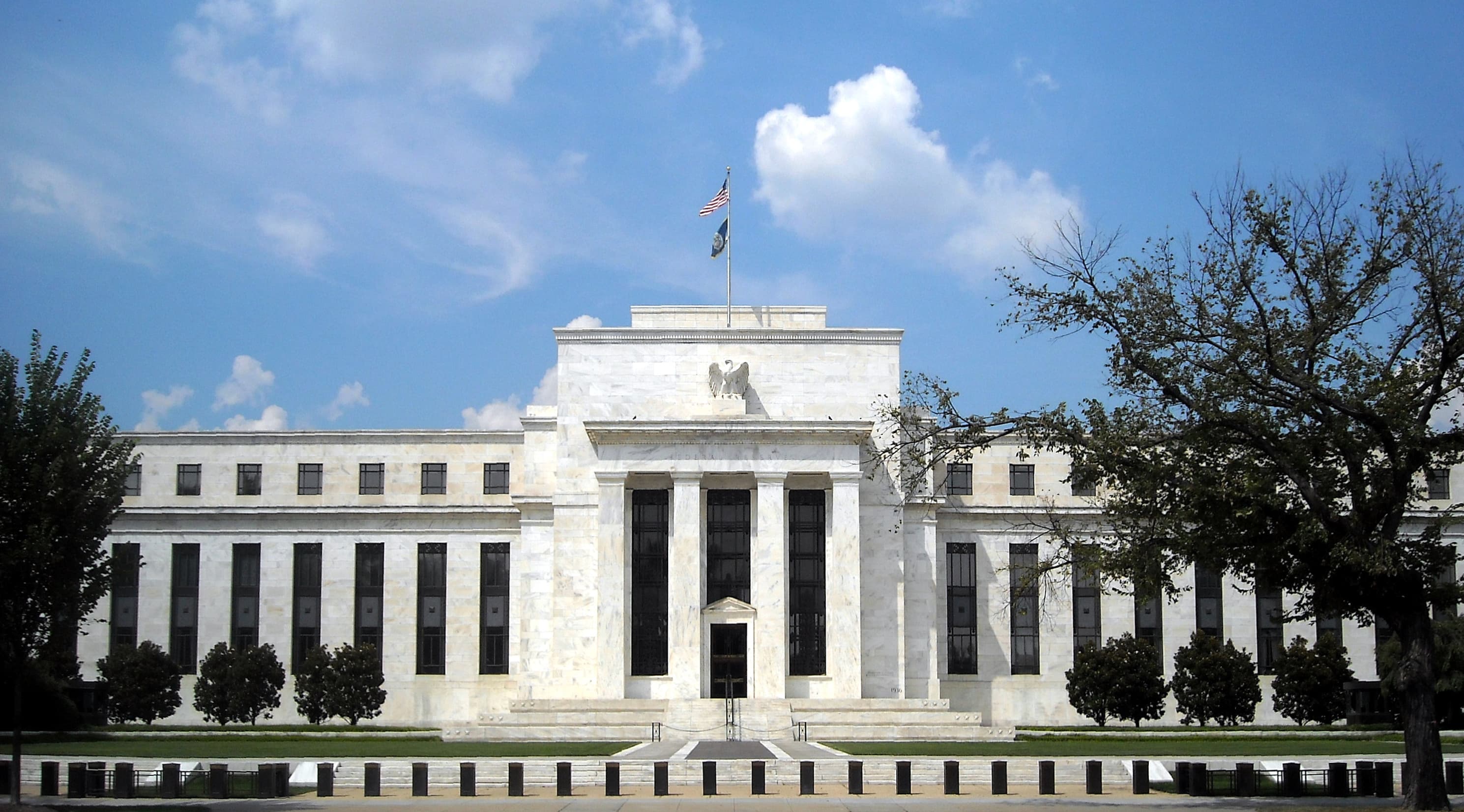
Washington, D.C. – The Federal Reserve’s stress test proposal is an encouraging step toward transparency, but further changes would help the agency more fully realize its goal of a more objective process that aligns capital charges with risk, a group of trade associations said in a comment letter today. The associations joining the letter were the Bank Policy Institute, American Bankers Association, Financial Services Forum, Securities Industry and Financial Markets Association, International Swaps and Derivatives Association and U.S. Chamber of Commerce.
“As a matter of process, the Federal Reserve’s proposal is a welcome move to the transparency and public comment that the law requires. The proposal also reflects serious efforts to improve the risk sensitivity of the models and the plausibility of the stress scenarios, though further changes are necessary to reflect risk more fully and better align the resulting capital charges. At the end of the day, a transparent and risk-sensitive stress test should promote more rational capital allocation and encourage participation in businesses that earlier limitations in scenario design and modeling may have made inappropriately uneconomic relative to risk, thereby supporting customer choice and U.S. economic growth,” the associations stated upon filing the letter.
Context. The Federal Reserve, for the first time, invited public comment on its stress test scenarios and models, as required by federal law, in line with a 2024 legal challenge filed by BPI and a coalition of partners 1. The agency issued a proposal seeking comment on the scenarios and models in late October 2025, along with proposing scenarios for the 2026 stress test. The associations commented on the proposed 2026 scenarios on Dec. 1, 2025, and those scenarios were finalized earlier this month. Today’s letter addresses the proposed changes to the stress testing process, models and scenarios.
Recommendations. The letter acknowledges the progress made so far in the Federal Reserve’s efforts to boost stress test transparency and recommends further modifications to support the Fed’s efforts to achieve this goal:
- Consider the stress tests in the context of the overall capital framework, including Basel III Endgame, the GSIB surcharge and reforms to the tailoring framework.
- Propose all model changes for public comment instead of only “material model changes.”
- Retain the Dec. 31 jump-off date for the stress tests to avoid increasing volatility in stress test projections and creating major operational challenges for banks. The proposal would move this date to Sept. 30.
- Firm up discretionary language and codify substantive reforms in regulatory text, including the scenario variable guides and the timeline for the stress testing process.
- For its models, the Fed should increase risk-sensitivity by reducing over-aggregation and expanding segmentation; avoiding internal inconsistencies and double counting; recognizing hedging effects; making efficient use of existing supervisory data; and strengthening transparency and governance around key model choices. The letter also recommends more granular adjustments to the models.
The letter also includes recommendations on the design of the stress test scenarios, building on the associations’ comments on the 2026 scenarios.
-30-
About American Bankers Association
The American Bankers Association is the voice of the nation’s $25.1 trillion banking industry, which is composed of small, regional and large banks that together employ more than 2 million people, safeguard $19.7 trillion in deposits and extend $13.2 trillion in loans.
About Financial Services Forum
The Financial Services Forum is an economic policy and advocacy organization whose members are the eight largest and most diversified financial institutions headquartered in the United States. Forum member institutions are a leading source of lending and investment in the United States and serve millions of consumers, businesses, investors, and communities throughout the country. The Forum promotes policies that support savings and investment, financial inclusion, deep and liquid capital markets, a competitive global marketplace, and a sound financial system.
About Securities Industry and Financial Markets Association
SIFMA is the leading trade association for broker-dealers, investment banks and asset managers operating in the U.S. and global capital markets. On behalf of our industry’s nearly 1 million employees, we advocate for legislation, regulation and business policy, affecting retail and institutional investors, equity and fixed income markets and related products and services. We serve as an industry coordinating body to promote fair and orderly markets, informed regulatory compliance, and efficient market operations and resiliency. We also provide a forum for industry policy and professional development. SIFMA, with offices in New York and Washington, D.C., is the U.S. regional member of the Global Financial Markets Association (GFMA). For more information, visit http://www.sifma.org.
About International Swaps and Derivatives Association
Since 1985, ISDA has worked to make the global derivatives markets safer and more efficient. Today, ISDA has over 1,000 member institutions from 78 countries. These members comprise a broad range of derivatives market participants, including corporations, investment managers, government and supranational entities, insurance companies, energy and commodities firms, and international and regional banks. In addition to market participants, members also include key components of the derivatives market infrastructure, such as exchanges, intermediaries, clearing houses and repositories, as well as law firms, accounting firms and other service providers. Information about ISDA and its activities is available on the Association’s website: www.isda.org. Follow us on LinkedIn and YouTube.
About The U.S. Chamber of Commerce
The U.S. Chamber of Commerce is the world’s largest business organization representing companies of all sizes across every sector of the economy. Members range from the small businesses and local chambers of commerce that line the Main Streets of America to leading industry associations and large corporations. They all share one thing: They count on the U.S. Chamber to be their voice in Washington, across the country, and around the world. For more than 100 years, we have advocated for pro-business policies that help businesses create jobs and grow our economy.