
Testimony on Empowering Main Street by Unlocking Access to Capital
Summary
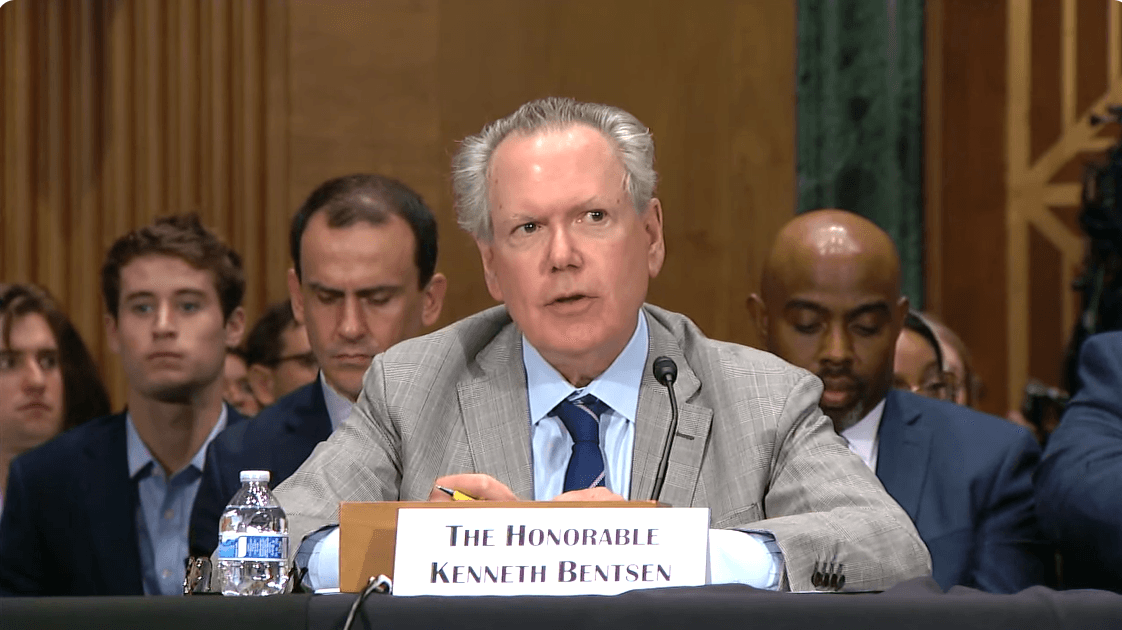
SIFMA President and CEO, Kenneth E. Bentsen Jr., delivered testimony at a hearing before the U.S. Senate Committee on Banking, Housing, and Urban Affairs entitled Empowering Main Street by Unlocking Access to Capital.
Excerpt
Introduction
Chairman Scott, Ranking Member Warren, and distinguished members of the Committee, thank you for the opportunity to testify today at this hearing on enhancing public capital formation in the United States. My name is Ken Bentsen, and I am the President and CEO of the Securities Industry and Financial Markets Association (SIFMA). 1
SIFMA has long supported legislative and regulatory efforts to encourage companies to go and remain public by ensuring the costs and requirements associated with becoming a public company are appropriately tailored, allowing issuance to flourish without introducing unnecessary risks to investors or the broader market. The JOBS Act, passed by Congress in 2012 with SIFMA’s support, is a prime example of how legislation can help companies access public markets and secure funding for growth. We believe this benefits not only issuers, but also investors by providing greater opportunities to participate in long term wealth creation. Equally important, it supports broader economic growth and job creation by encouraging investment in businesses, facilities, and equipment.
We believe a vibrant initial public offering (IPO) market is critical for job creation and economic growth in the U.S., helping businesses raise capital efficiently, create high-quality jobs and maintain America’s position as the world’s leading destination for entrepreneurship and investment. At the same time, supporting stronger public markets does not mean diminishing the role of private markets. Both play important and complementary roles in capital formation. While private markets provide valuable financing options, policymakers should seek to reverse the long decline in public company listings and IPOs so that companies and investors can benefit from robust opportunities across both public and private markets.
Becoming a public company in the United States can provide significant strategic and financial benefits for the issuer. By conducting an IPO, a company gains access to a broader pool of capital that can be used to fund growth initiatives, invest in innovation, pursue acquisitions, and strengthen its overall financial position. Public companies also benefit from increased visibility and credibility among customers, suppliers, investors, and potential business partners, which can enhance brand recognition and market confidence.
In addition, publicly traded stock can serve as a valuable engine for mergers and acquisitions, and a powerful tool for attracting, retaining, and incentivizing employees through equity-based compensation programs. Furthermore, access to the public capital markets can make it easier and more cost-effective to raise additional funds in the future, supporting long-term growth and strategic flexibility. Collectively, these advantages can enhance a company’s competitive position and provide a strong foundation for sustained expansion, long-term value creation, and continued success.
Buying shares of a public company also offers individual and institutional investors and the broader public significant benefits. Going public opens corporate ownership to Main Street investors, democratizing wealth creation and allowing retail investors through savings and retirement accounts and institutional funds through mutual funds, ETFs and pension plans to participate directly in capital formation.
- SIFMA is the leading trade association for broker-dealers, investment banks and asset managers operating in the U.S. and global capital markets. On behalf of our industry’s nearly 1 million employees, we advocate for legislation, regulation, and business policy, affecting retail and institutional investors, equity and fixed income markets and related products and services. We serve as an industry coordinating body to promote fair and orderly markets, informed regulatory compliance, and efficient market operations and resiliency. We also provide a forum for industry policy and professional development. SIFMA, with offices in New York and Washington, D.C., is the U.S. regional member of the Global Financial Markets Association.